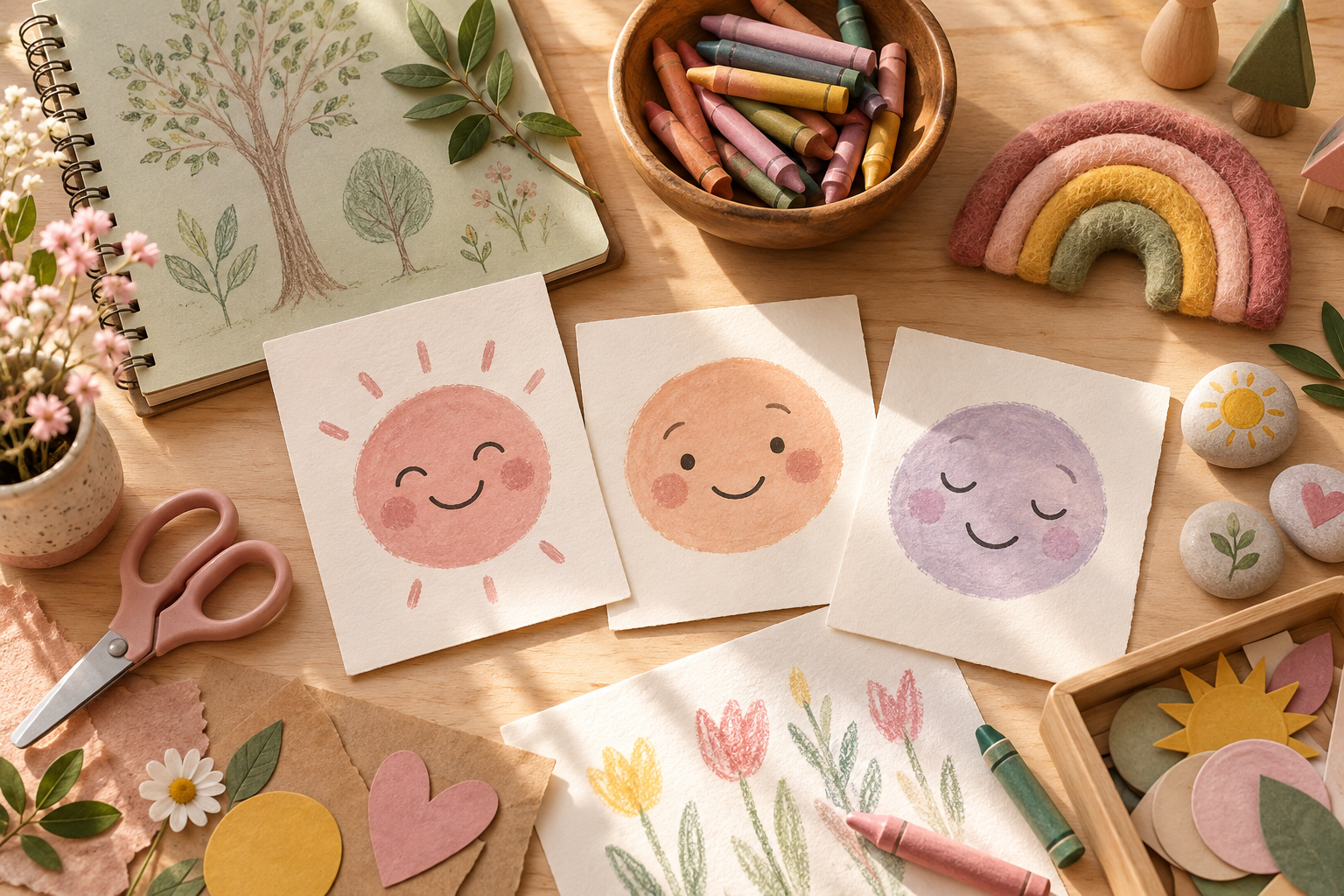
Draw three real parts of the day on large cards: welcome, play and goodbye. Place them at children's height on a strip with spaces marked now and next. Add a pocket for finished activities. Choose simple pictures of recognizable places or materials, such as the block corner for play. Before explaining the whole day, demonstrate how one card moves from the strip to the pocket when an activity ends. That visible action gives the schedule meaning and makes its changing sequence easier to follow.
Walk around the classroom with the cards and match each picture to its location. Then order two moments the group has just experienced: first we greeted one another, then we played. To explain a rainy-day change, place an indoor-play image over the playground card and name what stays the same, such as the snack afterward. The change card should show a concrete alternative. Let children consult the sequence again during the transition instead of expecting them to remember a long explanation.
Practice primero / first, después / next and terminado / finished while moving the pictures. Younger children can use just two cards and carry the next one to its matching place. Older children can break putting supplies away into three steps: gather, sort and return to the box. If an individual copy is useful, keep the same images used on the shared schedule. The symbols help most when they represent familiar actions rather than requiring a child to learn an entirely new visual code.
Before goodbye, ask which card helped someone know where to go and which picture was unclear. If the circle-time drawing looks like a wheel, add the cushion used for gathering. Include a break card so children can request time without having to leave the conversation. Store spare cards by topic for the next day. A shared schedule can change as the classroom changes: reviewing it means improving the clues available to children, rather than testing how much of the day each person remembers.
¡Hola!
Super Simple Español · FULL-LENGTH VIDEO
Choose a wave, a smile or a greeting card; each child decides how to join in.
Watch on YouTube ↗Make this idea your own: adapt the materials, pace and support to your group’s ages, interests and needs.
More little ideas ↗
A little conversation.
What worked in your classroom? Share a kind thought or a helpful idea. Comments and ratings are reviewed by Ximena.