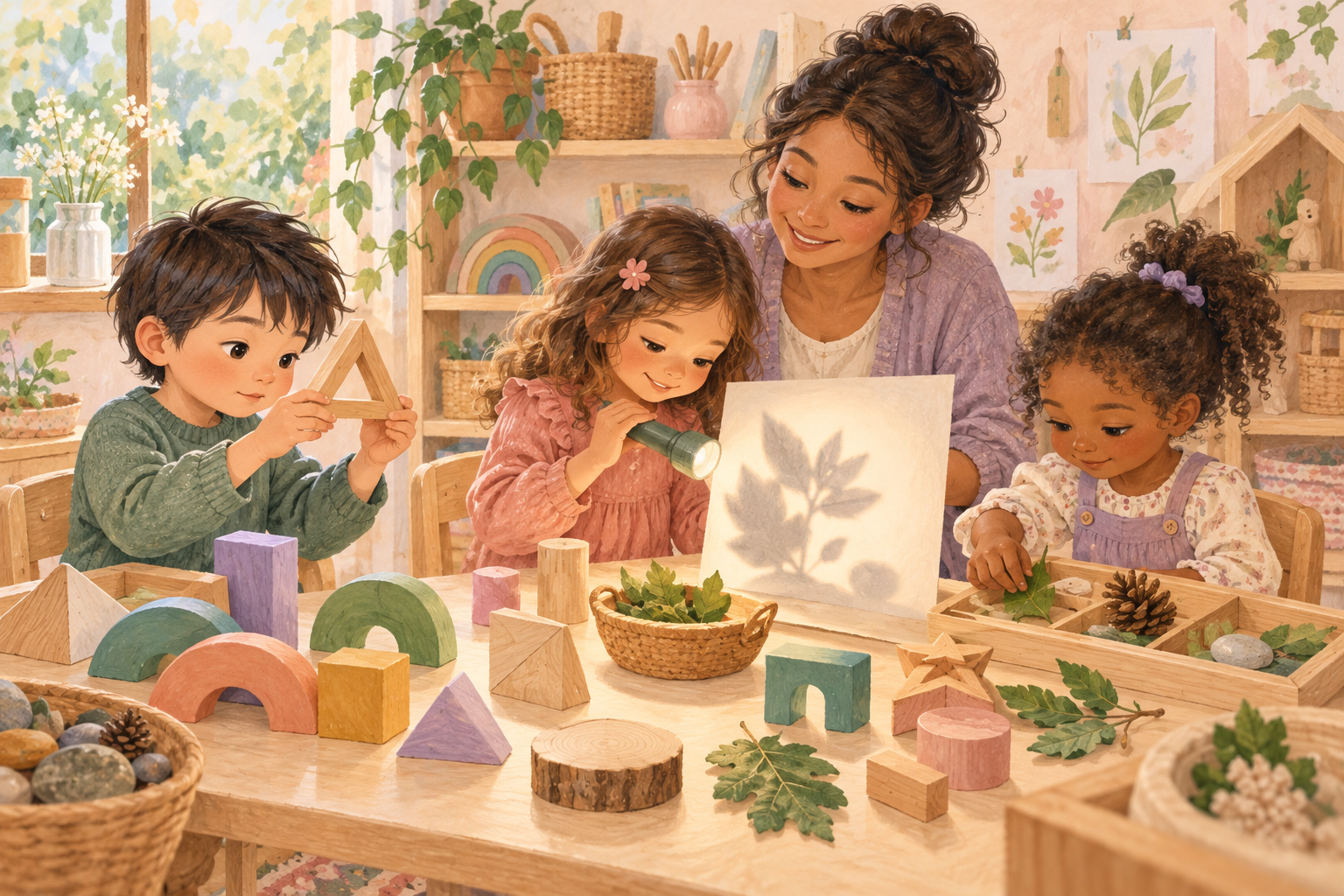
A flashlight and a cardboard shape can open a tiny light laboratory. Choose a pale wall, clear the floor and keep enough room lighting for everyone to walk comfortably. An adult holds the flashlight without pointing it toward anyone’s eyes. Before switching it on, invite predictions about where a cutout tree will cast its shadow. Attach a large sheet of paper to the wall for drawing what happens, and agree on a pause signal for anyone who needs a closer, quieter look.
Hold the tree between the light and the wall, then move it slowly toward the flashlight. Does its shadow take up more space or less? Trace two outlines in different colors and mark the cardboard positions on the floor. Keep the wall and light still so only one thing changes. Partners can swap the jobs of moving and observing while another pair draws predictions. If the outlines become confusing, separate the records and repeat the experiment from the original floor marks.
Use cerca / near, lejos / far and sombra / shadow as the shape moves. For four-year-olds, offer two positions and ask which makes the larger shadow. Children ages six to eight can add a third distance and arrange their drawings from smallest to largest. A paper strip can compare heights without requiring a ruler. Invite the group to point out which parts of the setup must stay still. A prediction may change after the test; draw an arrow between the first idea and the new one.
Turn the discoveries into a tiny theater: two trees, a cloud and a character searching for somewhere to rest. Changing a shadow’s size can suggest that the character is approaching, even though its cardboard shape stays the same. Share narration, lighting and movement jobs so children can contribute without acting. Save the outlines with one specific question: what might happen with a transparent shape? That question gives the next light investigation a practical starting point.
The Rainbow Song
Super Simple Songs · FULL-LENGTH VIDEO
Find three colors in the classroom and name each in Spanish and English.
Watch on YouTube ↗Make this idea your own: adapt the materials, pace and support to your group’s ages, interests and needs.
More little ideas ↗
A little conversation.
What worked in your classroom? Share a kind thought or a helpful idea. Comments and ratings are reviewed by Ximena.